
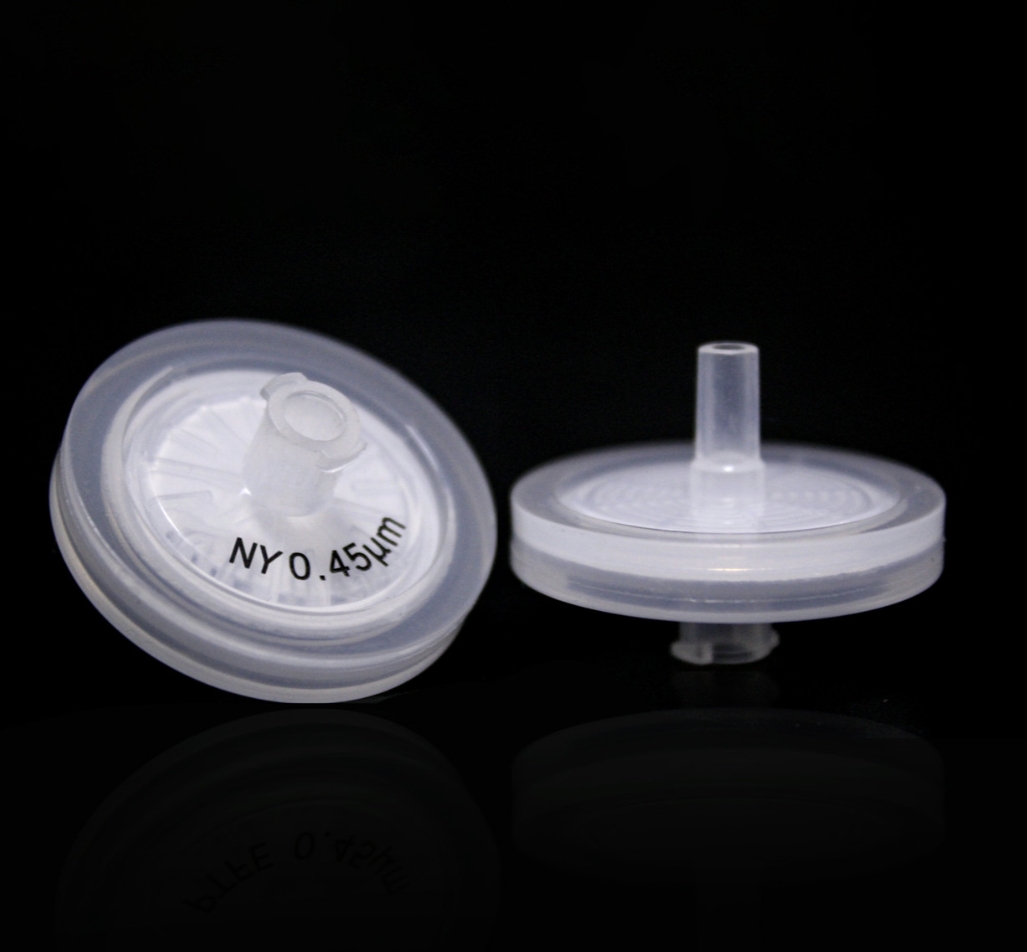
Syringe Filter Selection Guide: Membrane Types, Pore Sizes, and Compatibility Cheat Sheet
Posted by Maxi Scientific on Mar 16th 2026
Choosing the correct syringe filter is one of the simplest ways to improve sample quality, protect analytical instruments, and reduce filtration problems in the lab. Yet many labs still rely on whatever filter happens to be in stock rather than selecting the right membrane for their application.
The problem is that different syringe filter membrane types behave very differently depending on solvent compatibility, protein binding, and chemical resistance. Using the wrong filter can lead to clogged filters, sample loss, or contamination that interferes with analytical results.
This guide walks through how to choose a syringe filter, including membrane compatibility, pore size selection, and common filtration mistakes. If you’re looking for a quick reference, the cheat sheet below summarizes the most important decisions.
Syringe Filter Selection Cheat Sheet
| Membrane Type | Best For | Avoid With | Common Lab Applications |
|---|---|---|---|
| PTFE | Organic solvents | Pure aqueous samples (unless hydrophilic) | HPLC, LC-MS, GC sample prep |
| Nylon | General-purpose filtration | Protein samples | Environmental testing, mobile phases |
| PVDF | Protein solutions | Strong acids | Biological samples, cell culture media |
| PES | Aqueous buffers | Organic solvents | Sterile filtration, life-science work |
| Cellulose Acetate (CA) | Low protein binding | Strong solvents | Biological assays, aqueous samples |
| Regenerated Cellulose (RC) | Mixed solvent systems | Strong bases | LC-MS and HPLC sample prep |
If you're unsure which filter to use, start by identifying the solvent system and analyte type, then choose the membrane designed for that environment.
Understanding Syringe Filter Membrane Types
Selecting the correct membrane is the most important step in syringe filter selection. Each membrane type has unique chemical compatibility and adsorption behavior.
Below are the most commonly used membranes in analytical and life-science laboratories.
PTFE Syringe Filters
PTFE (polytetrafluoroethylene) filters are among the most chemically resistant membranes available. They are particularly well suited for organic solvent filtration and are widely used in chromatography laboratories.
Because PTFE is hydrophobic, it does not wet easily with water. Hydrophilic PTFE versions are available for aqueous filtration.
Common Uses
-
HPLC sample preparation
-
LC-MS sample prep
-
GC sample filtration
-
organic solvent filtration
Compatible Solvents
-
acetonitrile
-
methanol
-
hexane
-
isopropanol
-
toluene
PTFE filters are often the default choice when working with aggressive solvents.
Nylon Syringe Filters
Nylon membranes are frequently used as a general-purpose syringe filter because they tolerate both aqueous and organic solutions. They are durable and relatively inexpensive.
Common Applications
-
environmental testing
-
food and beverage analysis
-
mobile phase filtration
-
general laboratory filtration
Limitations
Nylon membranes can bind proteins, which may lead to analyte loss when filtering biological samples.
For protein recovery, other membranes such as PVDF or cellulose acetate are typically preferred.
PVDF Syringe Filters
PVDF (polyvinylidene fluoride) membranes are known for their low protein binding properties, making them ideal for biological and biochemical work.
They are commonly used when sample recovery and analyte preservation are important.
Typical Applications
-
protein solutions
-
enzyme samples
-
cell culture media
-
biological buffers
Advantages
-
minimal protein adsorption
-
strong mechanical durability
-
compatible with many solvents
Because of these characteristics, PVDF filters are common in biotechnology and pharmaceutical laboratories.
PES Syringe Filters
Polyethersulfone (PES) membranes are hydrophilic and designed primarily for aqueous filtration. They provide high flow rates and are widely used for sterile filtration.
Typical Applications
-
microbiology labs
-
sterile filtration of buffers
-
cell culture media preparation
-
pharmaceutical filtration
PES membranes perform best with aqueous solutions and may degrade in certain organic solvents.
Cellulose Acetate Filters
Cellulose acetate membranes are often chosen for applications requiring low protein binding and minimal extractables.
They are compatible with aqueous samples and biological solutions.
Typical Uses
-
biological assays
-
buffer filtration
-
protein sample preparation
However, they are not well suited for strong organic solvents.
Regenerated Cellulose Filters
Regenerated cellulose membranes work well with mixed solvent systems, making them common in chromatography laboratories.
Ideal Applications
-
HPLC sample preparation
-
LC-MS sample filtration
-
aqueous/organic mixtures
They combine good solvent compatibility with relatively low protein binding.
Choosing the Correct Syringe Filter Pore Size
After selecting the membrane, the next step in syringe filter selection is choosing the correct pore size.
Common Pore Sizes
| Pore Size | Typical Use |
|---|---|
| 0.45 µm | general particulate removal |
| 0.22 µm | sterile filtration |
| 0.1 µm | very fine particulate removal |
0.45 µm Filters
Used for routine sample preparation when the goal is removing particulates before analysis.
Common in:
-
HPLC sample prep
-
environmental samples
-
general filtration
0.22 µm Filters
Used when sterility or bacterial removal is required.
Common in:
-
microbiology work
-
cell culture media preparation
-
LC-MS sample preparation
Selecting the Correct Filter Diameter
Filter diameter affects flow rate and clogging resistance.
| Diameter | Typical Sample Volume |
|---|---|
| 13 mm | up to 10 mL |
| 25 mm | 10–100 mL |
| 30 mm | 50–200 mL |
Larger filters generally clog less quickly when samples contain suspended particles.
Common Syringe Filter Mistakes
Even experienced laboratories encounter filtration problems caused by simple selection errors.
Using the Wrong Membrane
For example, filtering protein samples with nylon membranes can result in analyte loss due to adsorption.
Using Filters That Are Too Small
Small diameter filters clog quickly when filtering particulate-rich samples.
Switching from 13 mm filters to 25 mm filters often solves this issue.
Using Hydrophobic Membranes With Water
Hydrophobic membranes like PTFE may not wet properly when filtering aqueous solutions.
Hydrophilic membranes perform better for water-based samples.
A Simple Syringe Filter Selection Workflow
When deciding which syringe filter to use, a simple workflow can help:
Step 1 — Identify the solvent
-
Organic solvent → PTFE
-
Aqueous solution → PES or CA
-
Mixed solvents → Regenerated cellulose
Step 2 — Determine if proteins are present
-
Yes → PVDF or CA
Step 3 — Choose pore size
-
particulate removal → 0.45 µm
-
sterile filtration → 0.22 µm
This process resolves most filtration decisions.
Why Proper Syringe Filter Selection Matters
Selecting the right syringe filter improves:
-
sample recovery
-
filtration speed
-
instrument protection
-
analytical accuracy
In chromatography labs, proper filtration also helps prevent column damage and autosampler blockages.
Given the cost of analytical instruments, filtration is one of the simplest ways to reduce maintenance problems.
Final Thoughts
Syringe filters may seem like simple consumables, but choosing the correct membrane, pore size, and diameter can significantly improve lab workflows and analytical results.
Using a quick syringe filter compatibility cheat sheet like the one above helps ensure that each sample is filtered using the most appropriate membrane.
If you ever need help selecting filters for a specific application, feel free to reach out.
At Maxi Scientific, we focus on making lab procurement easier with:
-
No hidden fees. EVER!
-
Free ground shipping
-
Consistently high product quality
-
Fast responses from a real human
If you want help choosing the right syringe filters for your lab, send over the filters you currently use or the application you’re working with, and we’re happy to help.