
Cannabis Potency Testing Consumables Checklist
Posted by Maxi Scientific on Aug 28th 2026
Cannabis Potency Testing Consumables Checklist
Running out of the right vial, filter, or solvent mid-batch is a frustrating way to find out your consumables order was short. Many cannabinoid potency workflows follow a similar sample-prep sequence: homogenize, extract, dilute, filter, and inject. The exact procedure varies by method and sample matrix, but the core consumables involved are often similar. Here's a checklist to work from, along with the reasoning behind each stage, so you can review your inventory before it becomes a problem.
Quick Cannabis Potency Testing Consumables Checklist
| Category | Purpose |
|---|---|
| Grinding / homogenization supplies | Breaks plant material into a uniform, representative sample |
| Extraction solvent (LC/MS or HPLC-grade methanol or ethanol) | Pulls cannabinoids out of the homogenized sample |
| Centrifuge tubes | Separates the liquid extract from plant solids |
| Pipette tips | Transfers extract between tubes and vials during dilution |
| Autosampler vials & caps | Holds diluted extract for injection, sized and thread-matched to your instrument |
| Syringe filters | Removes particulate before injection; membrane and pore size matched to solvent and method |
| HPLC-grade water, methanol, formic acid | Common mobile phase components for LC-DAD methods (method-dependent) |
| SPE cartridges | Used where a cleanup step is required for complex matrices |
Browse our full chromatography supplies category for these categories in one place.
The Method Behind the Checklist
Cannabinoid potency testing is commonly performed using a liquid chromatography with diode array detection (LC-DAD) approach. AOAC Official Method 2018.11 is one established, validated method for quantitating cannabinoids in plant material, concentrates, and oils, with hemp added to its approved scope in 2020. (Source: AOAC INTERNATIONAL) It is not the only method labs use, many run other validated methods or in-house modifications suited to their instrumentation and matrix. The consumables categories in this checklist apply broadly across LC-DAD-based cannabinoid workflows, though exact specifications should follow your lab's validated method.
Homogenization: The Step That Determines Everything After It
A representative sample starts here. Plant material is commonly ground until it reaches a fine, consistent texture, sometimes requiring more than one grinding pass depending on the equipment and matrix. An incompletely homogenized sample is a common source of inconsistent replicate results, since each replicate may end up pulling from a slightly different portion of an unevenly mixed batch.
Extraction and Dilution: Where Solvent Grade Matters
The homogenized sample is combined with an extraction solvent, commonly methanol or ethanol depending on the validated method, then mixed and typically centrifuged to separate the liquid extract from plant solids. Solvent grade matters here: LC/MS-grade or HPLC-grade solvents carry fewer trace impurities than general lab-grade solvent, which affects baseline noise and background contamination in the resulting chromatogram.
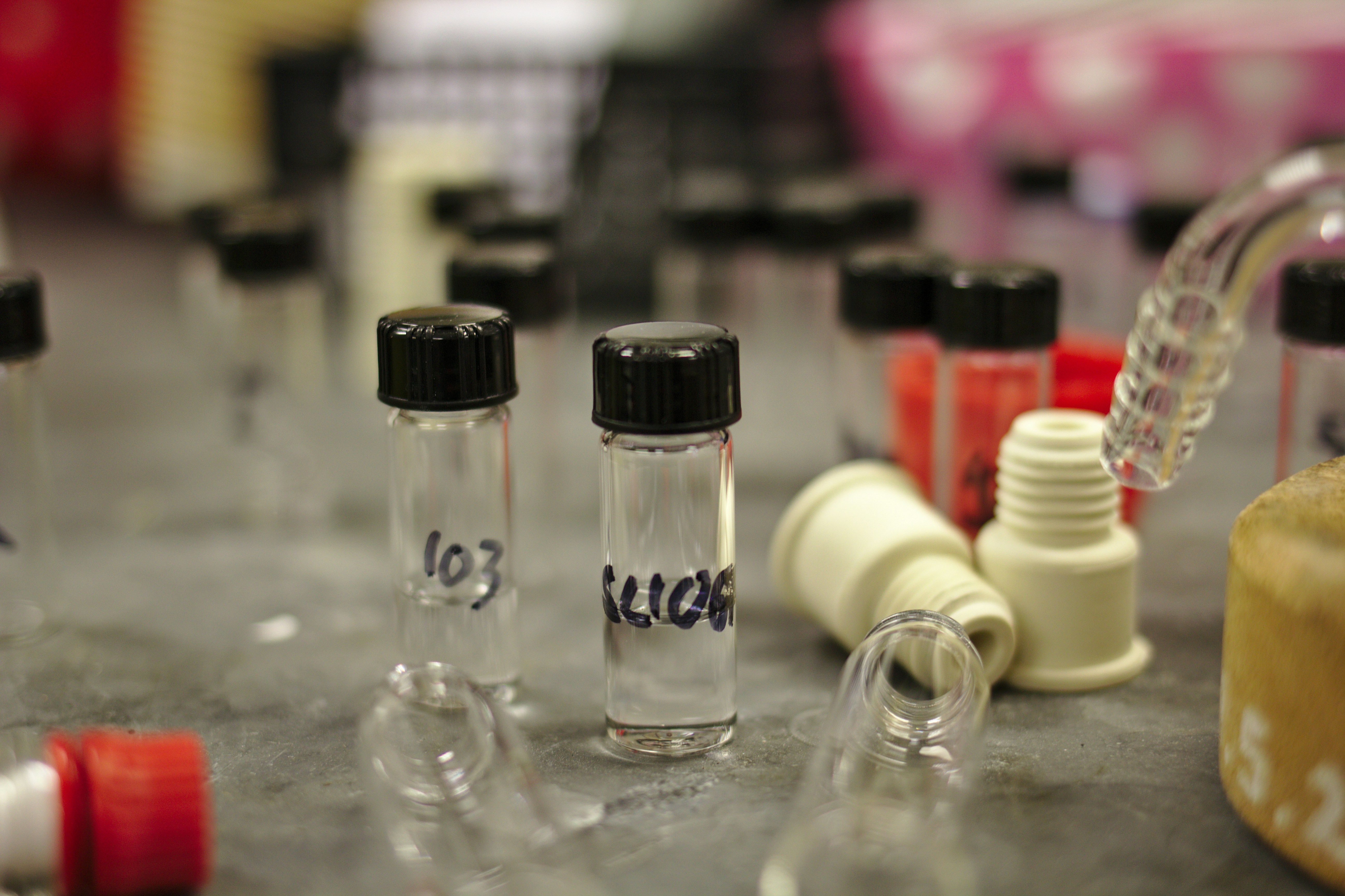
From there, many methods call for one or more dilution steps, moving a portion of the extract through progressively more dilute solutions until the cannabinoid concentration falls within the instrument's calibrated range. Each dilution step needs its own vial. Browse our autosampler vials and caps to keep enough clean, appropriately sized vials on hand for multi-step dilution series, not just the final injection vial.
Filtration: The Last Checkpoint Before Injection
Before injection, the diluted extract is generally filtered to remove fine particulate that could otherwise clog the column or interfere with the run. A 0.22µm syringe filter is commonly used for fine particulate removal, with membrane selection based on solvent compatibility and the validated method, PTFE and nylon are both common choices for organic extraction solvents. See our full breakdown of syringe filter options by solvent type if you need help matching a membrane to your extraction solvent.
Mobile Phase Prep
Mobile phase for LC-DAD cannabinoid methods commonly uses an HPLC-grade water and methanol gradient, sometimes with a small amount of formic acid added as a pH modifier to improve peak shape, as described in at least one published cannabinoid potency application note. (Source: Agilent, Dedicated Cannabinoid Potency Testing Application Note) Exact mobile phase composition depends on the specific validated method in use. Keeping mobile phase components fresh matters as much as the sample-side consumables; aged or previously opened solvent is a common, easily overlooked source of baseline drift.
Optional: SPE Cleanup for Complex Matrices
Straightforward flower and concentrate samples often go directly from extraction to filtration. Some complex matrices, edibles and other products high in fats, sugars, or other interferents, may require an additional SPE cleanup step before filtration. If your validated method calls for SPE, keep the appropriate cartridges on hand separately from your standard workflow supplies.
How to Plan Consumables for a Batch
There's no single universal quantity that works for every lab, how much you need depends on several variables specific to your batch and method:
- Number of samples being run in the batch
- How many dilution steps each sample requires
- Calibration standards needed alongside the samples
- QC samples and blanks included in the run
- Whether any samples need repeat injections
- Any additional consumables specific to your validated method
A practical starting point is mapping out one full batch on paper, sample count through final injection, and counting how many vials, filters, and dilution steps that specific run actually requires, then building a reorder point around your typical batch size and frequency rather than guessing at round numbers.
Quick Pre-Batch Checklist
Once you know what you need, use this to verify you're ready before starting:
- Grinding media clean and ready for the next sample
- LC/MS or HPLC-grade extraction solvent in stock, matched to your method
- Enough autosampler vials for every dilution step in the batch, not just final injections
- Syringe filters matched to your extraction solvent and method
- Fresh mobile phase components on hand
- SPE cartridges stocked separately if the batch includes edibles or other complex matrices
Common Consumables Mistakes That Show Up in Results
Using general lab-grade solvent instead of LC/MS or HPLC-grade. Lower-purity solvents carry more trace impurities, which can show up as extra baseline noise or unexpected peaks, sometimes mistaken for a contamination issue when it traces back to solvent quality.
Stocking vials per sample instead of per dilution step. A single sample can pass through two or three dilution steps before it's ready to inject. Planning vial inventory around sample count alone is a common way to come up short mid-batch.
Skipping a second homogenization pass when the first is incomplete. An unevenly ground sample can increase variability between replicate injections, since each replicate may be drawing from a slightly different portion of the batch.
Reusing mobile phase past a reasonable shelf life. Mobile phase, particularly with formic acid added, doesn't stay stable indefinitely. Baseline drift or retention time shifts over a long run are sometimes traced back to aging mobile phase rather than a column or instrument issue.
Storage Considerations for Cannabinoid Standards and Extracts
Cannabinoids are generally understood to be sensitive to light and heat, and THCA in particular can convert to THC under heat exposure. Extracted samples and standards awaiting injection are commonly held in a cooled autosampler compartment rather than left at room temperature for extended periods, and calibration standards not in active use are often stored in amber glass to help reduce light exposure. Exact storage conditions and hold times should follow your method's validated stability requirements rather than a general rule.
Method Note
Exact consumable specifications, solvent, filter membrane, pore size, vial type, SPE material, and storage condition, can vary by analytical method, sample matrix, instrument, and laboratory validation requirements. This checklist covers the categories of consumables that commonly appear across cannabinoid potency workflows; use it as a starting point for reviewing your inventory, not as a substitute for your method's documented specifications.
Need Help Stocking Up?
If you're mapping out consumables for an upcoming testing batch and want to avoid coming up short, browse our full chromatography supplies selection to review vials, filters, and mobile phase components in one place, or contact our team and tell us what your batch and method look like, we can help you think through reorder quantities before you run short.