
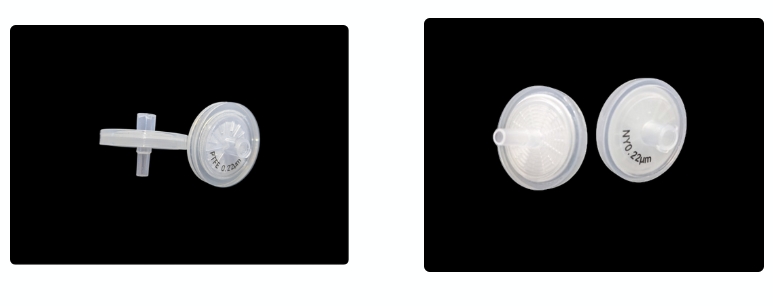
0.22 µm vs 0.45 µm Filters: Which Pore Size Should You Use?
Posted by Maxi Scientific on Mar 16th 2026
When preparing samples for chromatography, microbiology, or general laboratory filtration, one of the most common questions scientists ask is:
Should I use a 0.22 µm filter or a 0.45 µm filter?
Both pore sizes are widely used in laboratories, but they serve different purposes. Choosing the wrong pore size can lead to unnecessary clogging, slower filtration, or incomplete particle removal.
This guide explains the difference between 0.22 µm and 0.45 µm filters, when each pore size should be used, and how to select the right filter for your application.
Quick Cheat Sheet: 0.22 µm vs 0.45 µm Filters
| Filter Pore Size | Best For | Typical Applications |
|---|---|---|
| 0.45 µm filters | General particulate removal | HPLC sample prep, environmental testing |
| 0.22 µm filters | Sterile filtration | Cell culture media, microbiology |
If sterility is not required, many labs prefer 0.45 µm filters because they clog less easily and filter faster.
What Does Filter Pore Size Mean?
The pore size of a syringe filter describes the diameter of the microscopic openings within the filter membrane.
These pores determine the size of particles that the filter can remove from a liquid sample.
For example:
-
A 0.45 µm filter removes particles larger than 0.45 micrometers
-
A 0.22 µm filter removes particles larger than 0.22 micrometers
Because 0.22 µm pores are smaller, they remove finer particles and can retain most bacteria.
When to Use 0.45 µm Filters
A 0.45 µm filter is typically used for general filtration where the goal is to remove particulate matter rather than sterilize the sample.
Common Applications
-
HPLC sample preparation
-
environmental water testing
-
food and beverage analysis
-
particulate removal before analysis
In chromatography labs, 0.45 µm filters are often sufficient to remove particles that could clog columns or damage instruments.
Advantages of 0.45 µm Filters
Faster filtration
Larger pores allow liquids to pass through the membrane more easily.
Reduced clogging
Samples containing suspended particles are less likely to block the membrane.
Higher throughput
Filtration generally requires less pressure and time.
For these reasons, many labs default to 0.45 µm filters for routine sample prep.
When to Use 0.22 µm Filters
A 0.22 µm filter is used when finer filtration or sterility is required.
Because the pores are smaller, these filters can retain most bacteria and microorganisms.
Common Applications
-
sterile filtration of buffers
-
cell culture media preparation
-
microbiology work
-
LC-MS sample preparation
-
pharmaceutical filtration
Many life-science laboratories rely on 0.22 µm filters when preparing sterile solutions.
Advantages of 0.22 µm Filters
Bacterial removal
Most bacteria are larger than 0.22 micrometers.
Improved clarity
Smaller particles are removed compared with 0.45 µm filtration.
Better protection for sensitive instruments
Ultra-fine particulates are less likely to reach analytical equipment.
Why 0.22 µm Filters Clog More Easily
Because the pores are smaller, 0.22 µm filters trap more particles.
If a sample contains significant particulate matter, these filters can clog quickly.
In those situations, labs sometimes use a two-step filtration process:
-
Filter through a 0.45 µm filter
-
Follow with 0.22 µm filtration
This approach removes larger particles first and extends the life of the finer filter.
0.22 µm vs 0.45 µm Filters for HPLC
In many chromatography laboratories, both pore sizes are used depending on the application.
0.45 µm Filters
Common for:
-
routine HPLC sample preparation
-
removing particulates before injection
These filters generally provide sufficient protection for HPLC systems.
0.22 µm Filters
Used when:
-
working with very sensitive detectors
-
analyzing extremely small particles
-
performing LC-MS analysis
Some labs prefer 0.22 µm filters for LC-MS to minimize particulate contamination.
0.22 µm vs 0.45 µm Filters for Sterile Filtration
For sterile filtration, 0.22 µm filters are the standard.
Most bacteria range from 0.5 to 5 micrometers, which means they are retained by 0.22 µm membranes.
Because of this, regulatory and microbiology protocols often specify 0.22 µm filtration.
Choosing the Right Filter for Your Sample
When deciding between 0.22 µm and 0.45 µm filters, consider the following factors.
1. Is Sterility Required?
Yes → 0.22 µm filter
No → 0.45 µm filter may be sufficient
2. Does the Sample Contain Particles?
If the sample contains suspended solids, 0.45 µm filters clog less easily.
3. Are You Preparing Samples for LC-MS?
Many labs prefer 0.22 µm filters for LC-MS to remove very fine particles.
Common Filtration Strategy in Analytical Labs
Many laboratories follow a simple rule:
-
Use 0.45 µm filters for general filtration
-
Use 0.22 µm filters for sterile or high-precision work
This approach balances filtration speed with sample cleanliness.
Other Factors That Affect Filtration
While pore size is important, other factors also influence filtration performance.
Membrane Type
Common membrane materials include:
-
PTFE
-
Nylon
-
PVDF
-
PES
-
Cellulose acetate
Each membrane type has different solvent compatibility and protein binding characteristics.
Filter Diameter
Larger filters reduce clogging.
| Diameter | Typical Use |
|---|---|
| 13 mm | small sample volumes |
| 25 mm | routine laboratory filtration |
| 30 mm | particulate-heavy samples |
Final Thoughts
Understanding the difference between 0.22 µm and 0.45 µm filters helps laboratories select the right filtration strategy for their samples.
In general:
-
0.45 µm filters work well for routine particulate removal
-
0.22 µm filters are used when sterility or ultra-fine filtration is required
Choosing the correct filter improves analytical accuracy, protects instruments, and reduces filtration problems in the lab.
If you ever need help selecting the right syringe filters or pore size for your application, feel free to reach out.
At Maxi Scientific, we focus on making lab procurement easier with:
-
No hidden fees. EVER!
-
Free ground shipping
-
consistently high product quality
-
fast responses from a real human
If you want help choosing the right filtration products for your lab, send over the filters you currently use or the application you’re working with, and we’re happy to help.